

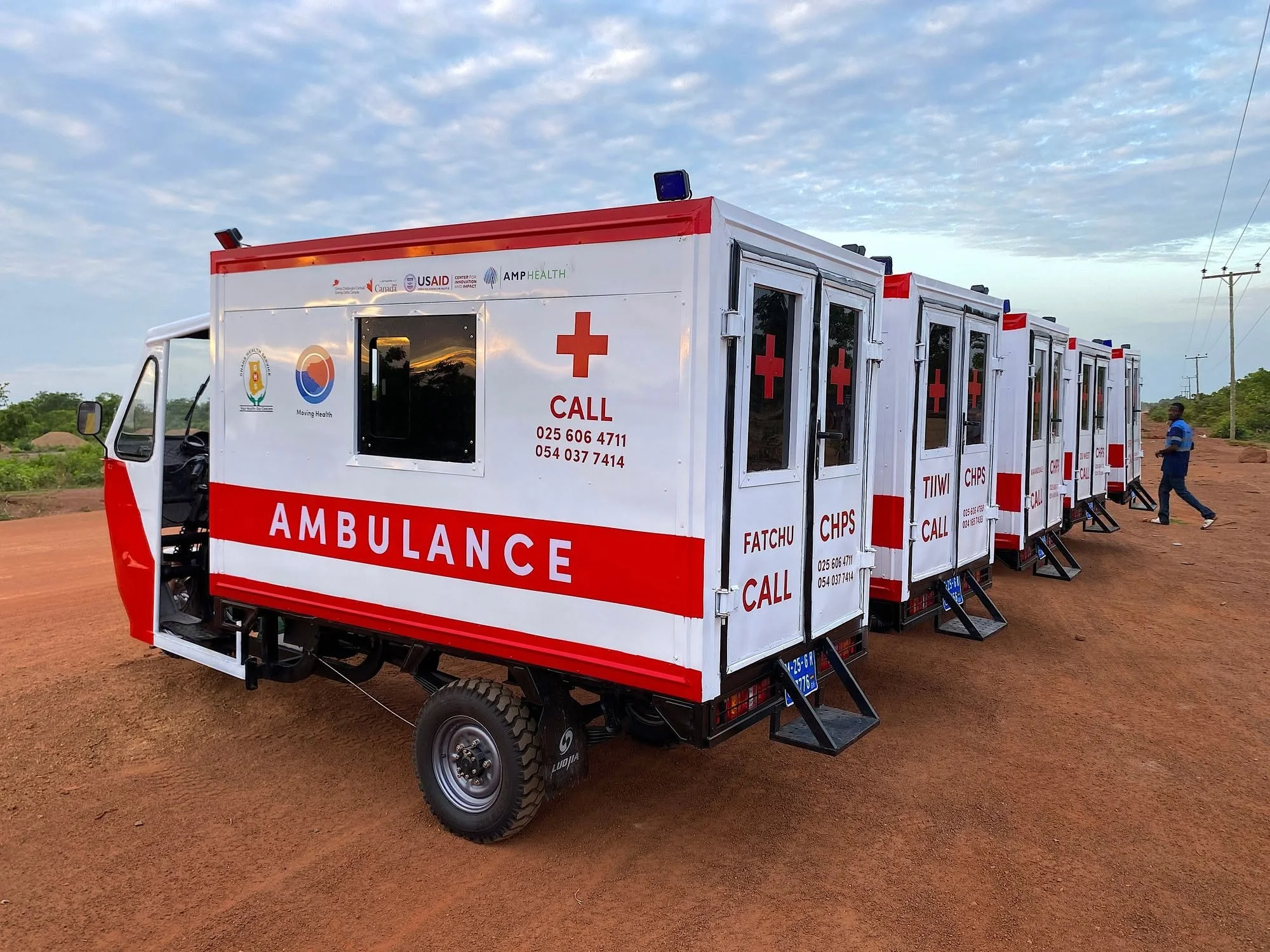
A homegrown Ghanaian health innovation has captured global attention after CNN featured Moving Health’s tricycle ambulances, highlighting how a locally designed solution is helping rural communities access lifesaving maternal care.
The tricycle ambulance initiative was one of the innovations supported through Ghana’s Country Innovation Platform (CIP), established by the Ghana Health Service with support from Grand Challenges Canada and Amp Health to identify, support, and strengthen promising health solutions developed for Ghana’s context.
Since being introduced in Ghana’s Upper West Region, the tricycle ambulances have reduced the time it takes for patients in rural communities to reach hospitals by 64%, helping people access urgent care faster. The story of these low-cost ambulances reflects the vision behind the CIP: supporting locally led ideas that respond to real health system challenges, and helping promising innovations move closer to scale.
A locally designed solution for a local challenge
In many rural communities in Ghana, reaching a health facility during a medical emergency can be one of the biggest barriers to receiving timely care. For pregnant women experiencing complications, delays in transport can have life-threatening consequences.
Moving Health’s tricycle ambulances were developed to address this challenge. Designed and manufactured in Ghana, the vehicles are built to navigate difficult rural roads where conventional ambulances may not always be accessible or practical.
The ambulances provide communities with a faster way to reach higher-level care, while also supporting emergency needs during transport. Their design has continued to evolve through feedback from health workers and communities, with improvements shaped by real experiences from the people using them.
From innovation to implementation
Through the platform, government leaders, innovators, funders, and partners worked together to connect innovation with health system priorities. The goal was not only to identify new ideas, but to create the partnerships and pathways needed for sustainable adoption.
Amp Health supported this process by helping strengthen collaboration, coordination, and innovation uptake, working alongside the Ghana Health Service and CIP partners to ensure solutions were aligned with country priorities.
Lessons from Ghana’s innovation journey
The global recognition of Ghana’s tricycle ambulances is a reminder that some of the most effective solutions come from those closest to the challenge. The CIP highlights the importance of:
Locally led innovation: Solutions are stronger when they are designed around the realities of communities and health workers.
Partnership for scale: Bringing together government, innovators, funders, and implementation partners creates the conditions for promising ideas to grow.
Strong health systems: Innovation succeeds when it is supported by effective leadership, coordination, and management.
As health systems across Africa continue to adapt to complex challenges, Ghana’s experience shows the value of creating space for local ideas to be recognised, strengthened, and shared with the world.