

How the Central African Republic used teamwork and trust to transform vaccine access

Dr PR Bissengue, EPI Director, Ministry of Health and Population, Central African Republic
The Central African Republic’s (CAR) Expanded Programme on Immunisation (EPI) closed 2025 with extraordinary progress. In October, we highlighted the team’s successful immunisation of 2.6 million children against polio and a 40% reduction of vaccine stockouts in one district thanks to better forecasting. Since then, cold chain coverage has jumped from 52% to 71%, and the country has made major strides in reaching zero-dose children. Behind these results is a team that rebuilt trust, embraced data, strengthened coordination, and put collaboration at the centre of service delivery,
Amp Health’s Management Partner, Daniel Mugunga Matabaro, recently sat down with EPI Director, Dr Placide Roch Bissengue, to reflect on the team's remarkable performance. When Dr Bissengue joined the EPI in June 2023, he inherited a technically strong programme with committed staff and several technical assistants already in place. But the biggest obstacle was not a shortage of skills.
“Our main challenge lay in coordinating and harmonising interventions among various team members. There was also a certain mistrust among colleagues, but also between partners and management staff,” he recalls. “This did not foster open collaboration or genuine teamwork.”
Instead of immediately pushing new interventions, Dr Bissengue focused on the foundations: role clarity, communication, and a shared sense of purpose. “From the outset, I emphasised the need to lay solid foundations: first and foremost, learning how to build a team,” he says.
This investment in people, not just programmes, became the turning point. It was so significant that 2025 culminated in the EPI team receiving an award for being the best-performing unit within the Ministry of Health and Population. Dr Bissengue was also nominated for a Medal of Merit from the Ministry of Health and Population for his outstanding leadership and performance, which he attributes to the strong support and partnership provided by Amp Health since 2024. But this recognition represents more than a trophy.
“We feel immense satisfaction and pride. It means we are moving in the right direction and building a high-performing team."
A system strengthened: Cold chain, coverage, and zero-dose children
The EPI team’s impact is visible across the immunisation system, starting with cold chain infrastructure. “Vaccination depends directly on the availability of cold chain equipment, as vaccines require very specific storage conditions. It is impossible to ensure vaccination in health facilities without a cold chain,” explains Dr Bissengue. “In late 2024, barely 50% of health facilities in the Central African Republic were equipped with solar-powered cold chains – a situation that had persisted for several decades.”
In 2025, the EPI team acquired new solar refrigerators, trained staff, and deployed nearly 500 additional solar units. As a result, cold chain equipment coverage increased from 52% to 71%, significantly expanding access to vaccination services nationwide.
Reaching zero-dose children, those who had never received a single vaccine, was another major priority. CAR is among the countries with the highest number of zero-dose children and, at the start of 2025, the national catch-up rate hovered at just 1%. Coverage data also showed that more than 50% of children were either unvaccinated or under-vaccinated. “By August 2025, we had increased the catch-up rate to 20%,” Dr Bissengue says. By October, the team was approaching 50%.
The impact on communities has been profound. “We have been able to reach and vaccinate a large number of children who, until now, had never received a single dose.” By September, Pentavalent 3 vaccine coverage exceeded 90% in one district, a milestone that demonstrates not only expanded reach but improved data quality and field performance.
“We can proudly say that these efforts have saved lives. Vaccination is, above all, about preventing preventable diseases, avoiding premature deaths, and sparing children from serious long-term consequences, such as those caused by polio, which can lead to lifelong disabilities. Through these results, we have brought joy, stability, and hope to many families across the country.”
Motivation, momentum, and the road ahead
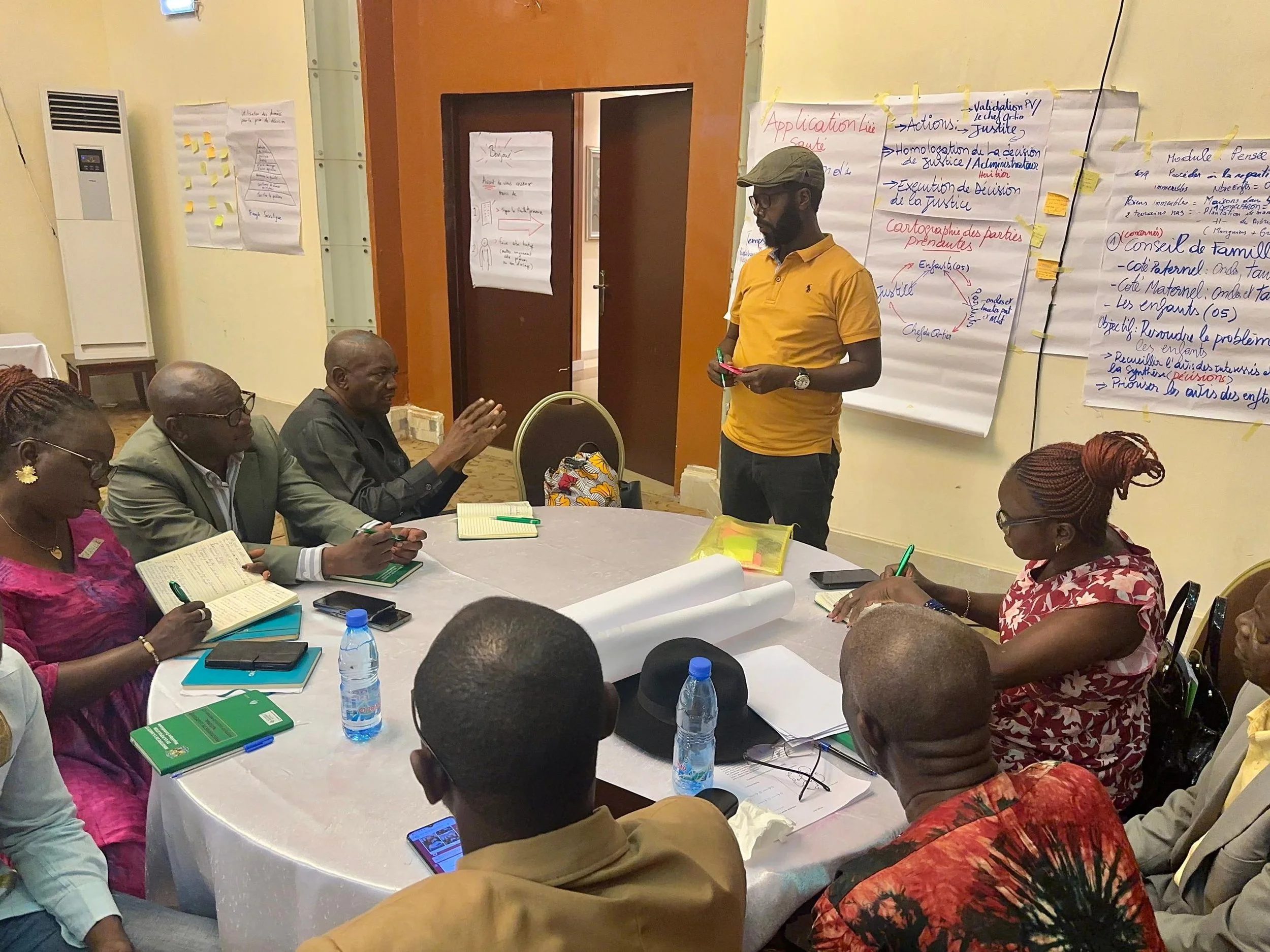
When asked about what keeps his team motivated, Dr Bissengue points to the deeply human nature of their work. “Above all, the feeling of saving lives. By administering a vaccine, we know we are helping to protect children from formidable, sometimes fatal or debilitating diseases.”
Data has also been a catalyst for motivation. During a pivotal working session held with Amp Health in Bangui, Dr Bissengue wrote the figure "16%" on the board, explaining that it represented the percentage of children in CAR who were fully immunised and protected against vaccine-preventable diseases. This figure deeply shocked the team.
“Many reacted by saying, 'We have to do something; we have to do better,” he shares. “From that moment on, everyone became more committed, and seeing numbers improve has been both a great source of satisfaction and a continuous source of motivation for us.”
Looking ahead, Dr Bissengue hopes the EPI team’s spirit, data-driven culture, and focus on performance will take root across the entire health system. “Success is collective. We must keep in mind that our common interest, beyond our respective functions and roles, is the health of the population,” he says. “If we place our people at the heart of our priorities, we will be more united and better prepared to provide the care and support that our communities expect from us.”